Most people know the old saying:
It takes 10,000 hours to become great at something.
By that measure, I crossed the line a long time ago.
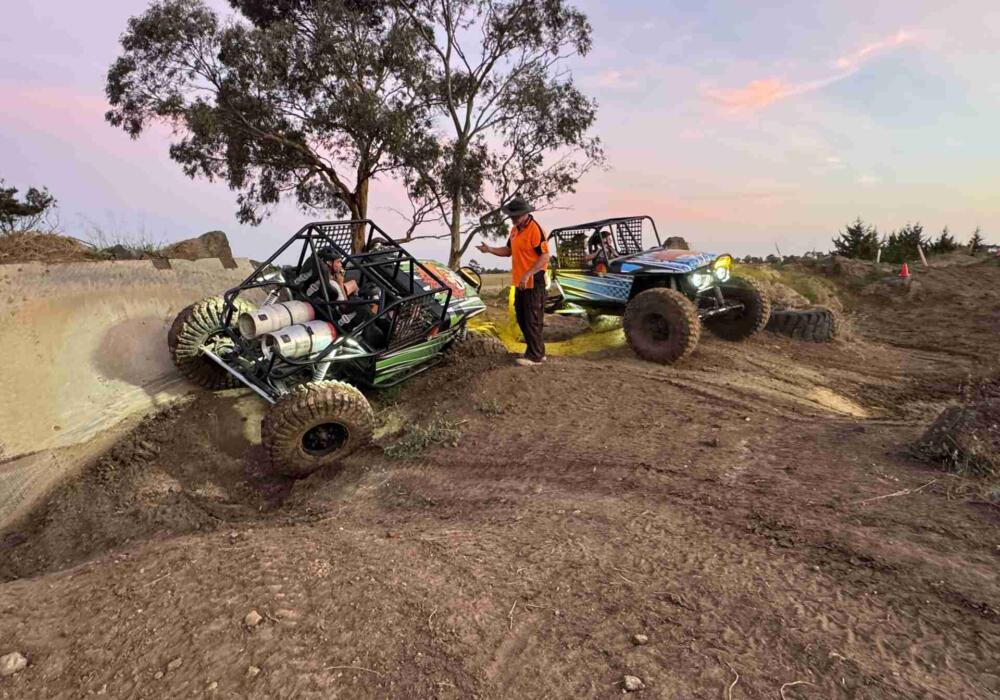
At Ragged Edge, I’ve now spent more than 15,000 hours spotting and guiding customers through our tracks. That’s not theory. That’s not management from a distance. That’s standing trackside, watching thousands upon thousands of real interactions unfold in real time.
And after that many hours, something interesting happens:
You stop “working” the process… and you start seeing it.
The Invisible Refinements
People often assume great customer experiences come from one big breakthrough.
In reality, they come from thousands of tiny adjustments.
Since 2009, I’ve been constantly tweaking and refining the role:
Should I stand here instead of there so customers can see me more clearly?
If I explain something this way, does it click faster?
Is there a more succinct way to say this?
What tiny friction point can we remove next?
None of those changes seem revolutionary on their own.
But over years — and thousands of repetitions — those incremental improvements compound into something seamless.
It’s the same with safety.
After enough hours, you start recognising problems before they fully develop.
You notice positioning issues early.
You recognise hesitation instantly.
You spot risky behaviour before it escalates.
The best operators rarely need dramatic reactions — because they’re already adjusting course long before a situation becomes dangerous.
Pattern Recognition at Scale
After 15,000 hours, there’s very little I haven’t seen before.
If a customer struggles with something, there’s usually a specific response that helps.
If they hesitate, there’s often a better way to frame the next step.
Over time, you build an internal library of human behaviour:
who needs reassurance,
who needs clarity,
who needs confidence,
who just needs one sentence delivered the right way.
That level of pattern recognition only comes from repetition.
You earn it one interaction at a time.
Founder-Led Matters
As Ragged Edge becomes increasingly founder-led, this matters more than ever.
Because the systems, processes, and customer experience weren’t built in a boardroom.
They were built live.
In the field.
One customer at a time.
Every improvement came from direct observation:
watching where people naturally look,
noticing where confusion appears,
seeing where excitement builds,
understanding what creates confidence.
That level of detail is hard to fake.
And over time, it becomes embedded into the culture, the systems, and the experience itself.
Experience Creates Simplicity
Customers see a calm, smooth experience.
What they don’t see are the years of observation, testing, refining, and repetition underneath it.
The pauses.
The wording changes.
The positioning adjustments.
The process refinements.
15,000 hours teaches you that excellence is rarely about doing one thing dramatically differently.
It’s about doing hundreds of small things slightly better — consistently — for a very long time.
And eventually, those improvements become invisible.
They simply become part of the Ragged Edge standard.